When I saw the latest numbers from Halton Police, I did exactly what you probably did. I pictured my own driveway, my garage, and the front hall where we drop keys and bags.
Halton Regional Police share annual crime statistics on their public site. In those stats, theft over $5,000 in the region rose by roughly 68 percent from 2024 to 2025 (Halton Regional Police crime statistics). That sounds big. It is a noticeable jump. But it also needs some context.
I am not here to scare anyone. Halton is still one of the safer regions in Canada according to police-reported crime data (Statistics Canada). A rise like this is a signal, not a reason to panic. It is a nudge to tighten up a few things at home and in our neighbourhoods.
I will walk through what “theft over $5,000” usually covers, what is commonly targeted around homes, and what I would actually do at my own place.
What “theft over $5,000” usually looks like around here
The legal category includes any theft where the value is above that dollar mark. That can cover a lot of ground. Around Burlington, Oakville, Milton, and Halton Hills, it often falls into a few buckets.
High value vehicles. This is a big one. Late model SUVs and trucks, sometimes work vans with tools. There is a national focus on auto theft now (Public Safety Canada auto theft plan). Here in Halton, that shows up in the numbers as well.
Break and enters that hit big ticket items. A single incident where jewellery, high end watches, designer bags, or electronics are taken can cross that $5,000 mark quickly. Halton Police have put out specific advisories about spikes in break and enters and how groups target homes for valuables (Halton Police advisory on break and enters).
Construction and commercial theft. Trailers with equipment, tools from job sites, that sort of thing. Even if you are a homeowner, it matters if you park work vehicles at home or keep tools in the garage.
So when we hear about a 68 percent rise, we are not talking about every porch pirate. We are mostly talking about fewer but larger losses. The kind that really sting a family or a small business.
Commonly stolen items in and around homes
Let me translate those categories into what I actually see in driveways and front halls around Halton. Again, this is illustrative, not tied to any specific family.
On the driveway
- Late model SUV or pickup truck
- Work van with tools and inventory
- Trailer with landscaping or construction gear
These are attractive because they can be moved quickly and fenced or shipped. Often, thieves are in and out in a couple of minutes.
In the garage
- Power tools and equipment
- Bikes and e bikes
- Sporting gear, skis, golf clubs
- Stored electronics or “overflow” items that did not fit in the house
Garages are funny. We treat them like they are inside the home, but a lot of them have builder grade doors and a window panel you can see right through. That combination is not ideal when higher value items are stored inside.
Inside the house
- Jewellery boxes in main bedroom dressers
- Name brand handbags and watches
- Laptops and tablets in living rooms or on kitchen counters
- Cash left for trips or events
Halton Police have talked about how some organized groups specifically target jewellery and valuables during break and enters (Halton Police advisory on break and enters). They are in the house for minutes, not hours. They go mostly where everyone keeps the “good stuff” and then they are gone.
None of this is a reason to live in fear. It is a reason to take five or ten minutes and ask, “If someone walked from the sidewalk to my front door, what would they see and how much time would it take them to get in”
A calm checklist to lower your risk
This is the quick once over I do in my own head. It is not fancy. It is just what makes a thief’s job more annoying so they are more likely to move on.
- Driveway visibility. Park so that neighbours and the street can see your vehicles. Do not create a blind spot behind tall shrubs if you can help it.
- Keys and fobs. Keep vehicle keys and house keys away from the front door and main floor windows. A small key hook inside a closed closet is better than a bowl by the door.
- Garage habits. Close the garage door every time. Even if you are just “running in for a second.” Get in the habit of a quick glance at the door before bed.
- What can you see from the sidewalk. Stand on the street and look at your front windows and side lights. If you can clearly see a lot of valuables, consider moving them or adding privacy where it makes sense.
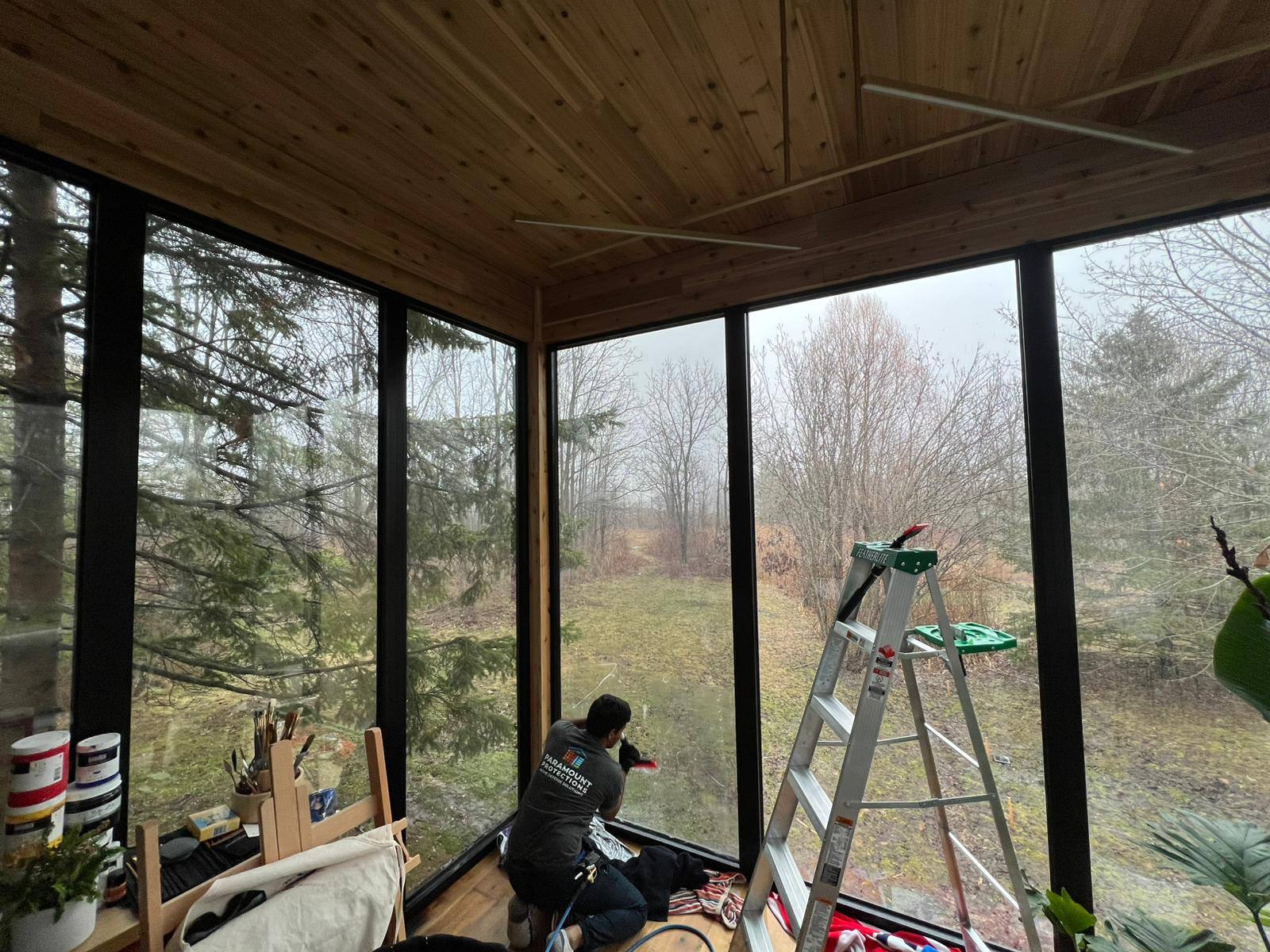
- Window strength. Ground floor windows and patio doors are common entry points. At my own place I use window security film on vulnerable glass to make it harder and louder to break through.
- Doors and locks. Solid strike plates, long screws into the framing, and a decent deadbolt. Nothing exotic, just solid basics that buy time.
- Neighbour check in. If you are away, let one trusted neighbour know. Ask them to bring in packages and keep an eye on the place. You can return the favour for them later.
Most of that costs little or nothing. It is more about habit than hardware.
Where real hardware can help, without overdoing it
I install security systems for a living, but I am still a homeowner first. I do not recommend turning your place into a bunker. I look for small changes that fit how a family actually lives.
Windows and patio doors. As I mentioned in the checklist, we use window security film on vulnerable ground floor glass at my own house. It does not make glass unbreakable. It helps the glass stay together if someone tries to smash it. That slows them down and creates more noise. For most opportunistic thieves, that extra hassle is enough reason to move on.
Garage and side doors. If someone wants to get tools or a bike, the fastest route is often a weak side door or a basic garage entry door. Simple door reinforcement on the lock side and hinge side can add a lot of resistance. It is not glamorous, but it matters.
Alarms and cameras. This is where deterrence comes in. Visible cameras and signage, paired with a decent alarm, are about signalling that your house is not the easy option. They also help you and the police piece together what happened if there is an incident later. The goal is time. The more layers of effort a thief sees, the more likely they are to walk past your place.
Every home is different. A townhouse near Appleby is not the same as a detached farm property near Campbellville. The layers should match your layout and your routines.
Making sense of crime maps without spiralling
One mistake I see a lot is people falling down the crime map rabbit hole. Halton Police have a public crime map and stats that are very helpful tools (Halton Police crime map). The trick is to use them to inform, not to frighten.
Here is how I use them personally. I look at the general pattern in my area a couple of times a year. I check for clusters of break and enters or thefts near my usual routes, like the kids’ school or the grocery store. If I see a pattern, I adjust small habits. Maybe I am more careful about what I leave in the car. Maybe I talk with the neighbours about lights and sightlines.
What I do not do is stare at the map every night. Our brains are not built for that. I would rather focus on a simple routine that we actually follow.
Common questions
Do these numbers mean my neighbourhood is suddenly unsafe
Not necessarily. A 68 percent rise in theft over $5,000 sounds huge, but Halton starts from a relatively low baseline compared to many other regions in Canada based on police reported data (Statistics Canada). A handful of extra high value thefts or a spike in vehicle thefts can shift the percentage a lot. It is a reason to pay attention and tighten up your own layers, not a sign to panic.
Is it worth upgrading anything if I already lock my doors
In my view, yes, as long as upgrades match how you live. Good habits are the foundation. Small physical improvements, like stronger door hardware or security film on accessible windows, mostly buy you time and noise. That combination makes you less attractive than the next easiest target. You do not need everything at once. Start with your easiest entry points.
Should I tell neighbours about incidents, or keep it quiet
I am a big fan of quietly sharing useful information. If there is a break in or a rash of thefts on your street, a quick chat or group message can help everyone check their own basics. No need to dramatize it. Just “this happened, here is what police are saying, here is what we are doing at our place.” That is usually enough.
Next step
If you are looking at your driveway or your front windows differently after hearing about the theft stats, that is normal. If you want a calm second set of eyes, my team and I are happy to walk through your place and point out practical, budget aware improvements. You can reach us to book a risk assessment at /contact. We will talk through how you actually live, what you want to protect, and what layers make sense for your home in Halton right now.