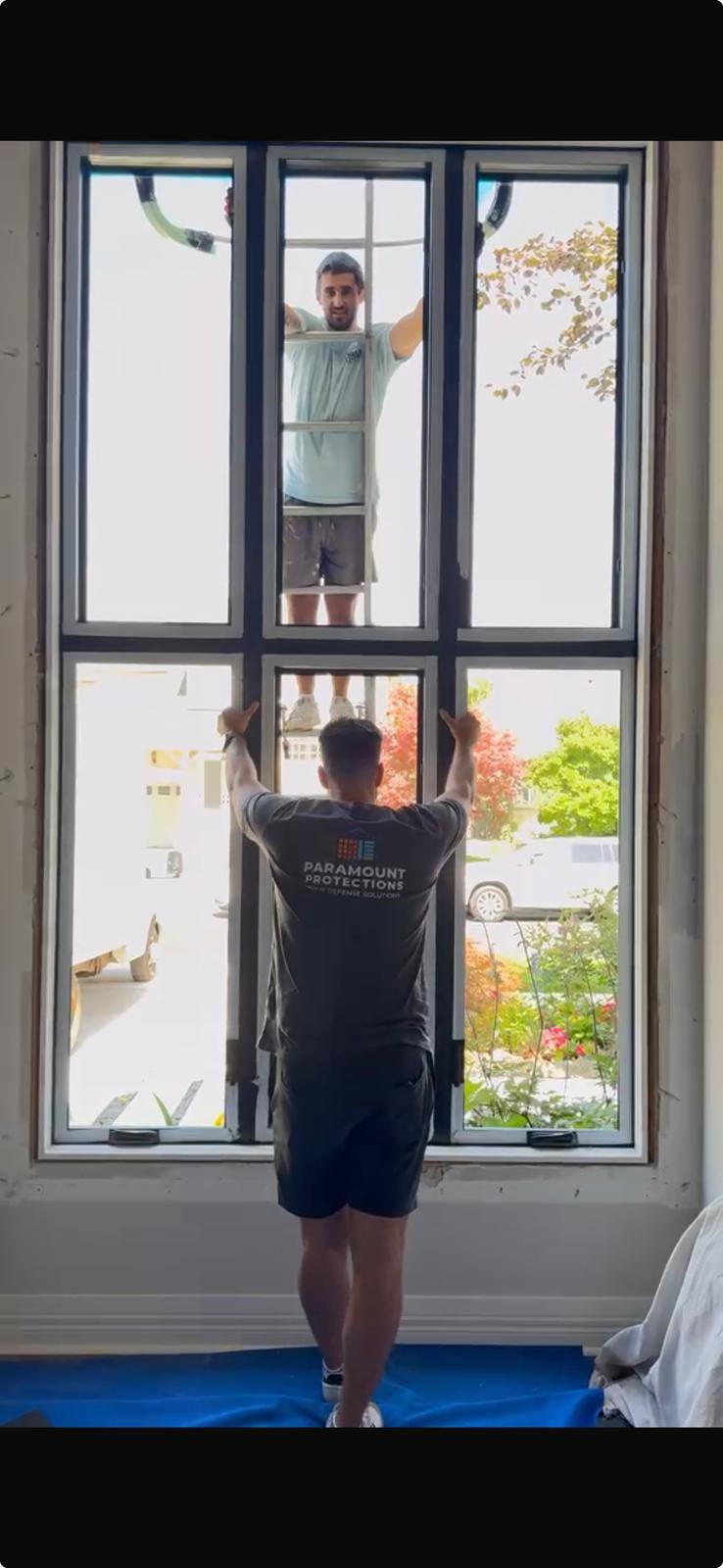
On job sites across Burlington, Oakville, Milton, and the west GTA, I keep seeing the same pattern. People lock their front doors carefully, then leave the garage as the soft spot. A basic overhead door, a service door with loose screws, keypad code everybody knows, and sometimes a direct door straight into the house.
In this article I will walk you through how a proper garage security package actually works. Not marketing talk, just what I install, what problems it solves, what it does not do, and when it makes sense for your place.
I am David, co-founder at Paramount Protections, and I still spend most of my week in attics, garages, and mechanical rooms. I will keep this as practical as the conversations I have in driveways every day.
What we mean by “garage security”
Garage security is not one single product. It is a set of layers we can choose from, depending on how you actually use the space. In plain language, we are trying to do four things.
- Make it harder to quietly force the overhead door.
- Strengthen the side and house-entry doors around the garage.
- Detect and record motion and door openings.
- Give you a way to respond, even if you are not home.
Most homes and small businesses land on some mix of:
Physical reinforcement. This is where we add stronger locks, reinforced strikers, door wraps, braces, and internal locking bars or anchors for overhead doors.
Electronic detection. Door contacts on the overhead and side doors, motion sensors in the garage, and often cameras pointed at the driveway and inside the garage.
Operational changes. How keypad codes are managed, how keys are stored, where vehicle fobs live, and how often doors are left open while people are home.
At Paramount, the detailed options live on our garage security page, but the goal is always the same. Add delay. Add noise. Add visibility. None of this makes your place untouchable. It simply makes it less attractive and buys time to notice and respond.
How overhead garage door protection actually works
The overhead door is usually the easiest large opening on the property. Here is what we do about it, step by step.
1. Check the existing hardware
I start by looking at the tracks, rollers, hinges, and especially the section where the opener arm connects to the door. On a lot of installs I see thin stamped steel brackets held with a few short screws into soft wood.
If that attachment point fails during a forced entry, the door can bow in the middle even if the locks are good. We often upgrade the bracket and use longer structural screws into the framing above the header.
2. Deal with the emergency release risk
Most sectional doors have a red emergency release cord. On some doors, you can push the top panel in with a coat hanger and pull that cord. The opener trolley releases and the door can be rolled up by hand.
There are a few ways to reduce this risk:
- Adjusting the track and top panel so it does not flex as easily.
- Adding a simple shield around the release mechanism.
- Shortening or re-routing the cord so it is not close to the door itself.
I walk the homeowner through the options because we still want you to be able to use that release in a power outage.
3. Add manual locking where it makes sense
Some garages still have side-bolt locks that slide directly into the vertical tracks. Those can be good, but if you have an automatic opener you need interlocks so you do not hit the opener with the bolts engaged. I have seen more than one opener arm twisted that way.
For a lot of modern doors we use interior floor or wall anchors that lock the bottom section from inside. These are low profile steel brackets or posts anchored into the slab or framing. A pin or bar locks into place when you are in for the night or away on a trip.
I explain it to customers like this. The opener is for daily convenience. The manual lock is like a deadbolt for the door when you want extra resistance.
4. Add sensing
We almost always add a magnetic contact to the overhead door. That contact talks to the alarm panel and tells it whether the door is open or closed. If we are already doing an alarm system in the home or business, this is a small addition that gives you alerts if the door opens when it should not.
In some garages I also add a tilt sensor directly on the door, which can be handy when the geometry makes standard contacts tough to mount.
Side doors and the door into the house
Most forced entries involving garages that I hear about from police or clients start with a weak man door, not the big overhead door. Halton Regional Police talk a lot about basic measures like locked doors, better locks, and lighting in their burglary prevention tips, and that lines up with what I see on site.
On a typical garage job I focus on two doors.
The exterior “man door”
This is the side door to the driveway or backyard. It is often builder grade, with a light steel skin over foam and short screws into a soft pine frame.
What we usually add:
- Continuous hinge reinforcement or at least 3 to 3.5 inch screws into the studs.
- A stronger strike plate or full wrap plate tied into the framing.
- A deadbolt that actually throws deep into solid wood.
- On some doors, security film on any glass, tied into the frame.
These are the same principles I use when we do dedicated door reinforcement. It is simple carpentry, but it makes prying and kicking noisier and slower.
The door from garage into the house
This is your last line between the garage and the interior. If someone does get into the garage, this is the door that protects your family room or kitchen.
On newer homes this door is usually fire rated, which we keep intact. We reinforce the frame, upgrade the strike, and add or improve the deadbolt. We also usually put a contact on this door tied into the alarm so you know instantly if it opens.
Cameras, alarms, and how they fit with a garage
A lot of clients ask if they should bother with cameras in the garage. Here is how I think about it.
Driveway and exterior cameras. These are often more useful than an interior garage camera because they show approach, vehicles, and licence plates. When we install security cameras we try to cover the driveway, front walk, and the area around garage man doors.
Interior garage cameras. I add these when there are high value items inside. For example, classic cars, tools, bikes, or inventory for a home-based business. In that case we place the camera high, away from impact, looking across the vehicles and towards the man door.
Alarm integration. In most setups the overhead door contact, man door contact, and a motion sensor in the garage are part of the same panel as the house. That way, if there is movement in the garage when the system is armed, you get an alert and, if you choose, a monitoring response.
What this does not do is physically stop anyone. Electronics provide information and response, not physical resistance. That is why we always pair alarms and cameras with real hardware upgrades.
Who garage security fits and who it does not
Not every property needs the same level of attention on the garage. Here is how I walk people through it during an onsite visit.
Homes where the garage is critical
From what I see across Halton and the GTA, the following setups benefit the most from a proper garage package.
- Attached garages with a direct door into kitchen or mudroom.
- Homes where car keys and fobs are often left in the garage.
- Houses backing onto trails or parks, where the side or rear garage door is more hidden.
- Driveways that cannot be easily seen by neighbours or from main windows.
- Townhomes where the garage is the main entry used by the family.
For many of these, we also talk about driveway bollards or small layout changes if vehicle theft is a concern, since federal and provincial agencies have highlighted ongoing issues in that area in plans such as the National Action Plan on Combatting Auto Theft.
Small businesses and commercial units
In light industrial and commercial strips, the “garage” is often a loading bay or roll-up door at the back. For those properties we blend garage-focused measures into a broader commercial security plan, so the bay doors, man doors, and any storefront glass are all treated as one system.
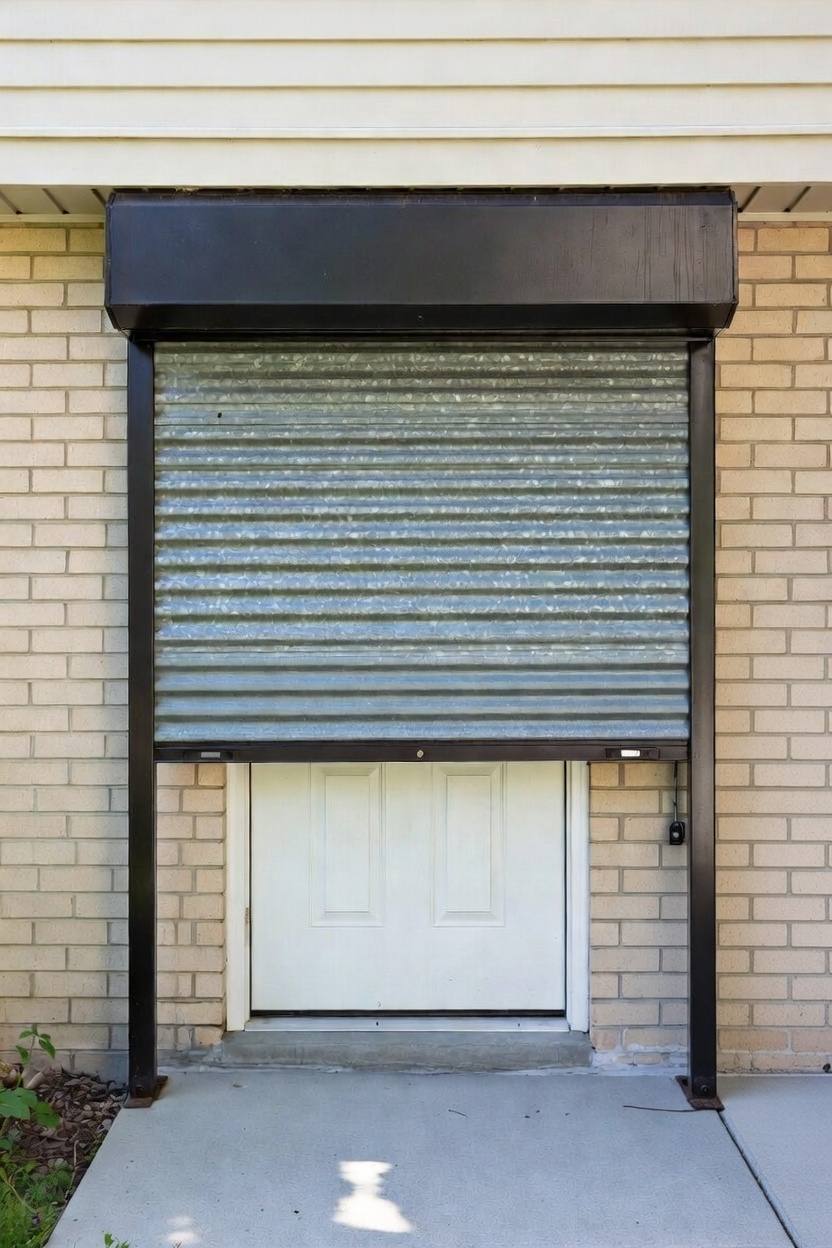
Interior cages, better locks on tool storage, and sometimes shutters over loading doors become part of the conversation.
Where a lighter touch is enough
If you have a detached garage that is mostly used for lawn tools, far from the house, you might not want extensive electronics. In those cases I usually recommend some basic door reinforcement, sensible lighting, and a camera covering the lane or yard rather than the interior.
Checklist: a quick look at your own garage
Here is a simple checklist you can run through this week. You do not need tools for most of it, just ten minutes and a notepad.
- Overhead door closes fully and seals against the floor without gaps.
- You cannot easily push the top panel in by hand from outside when it is locked.
- Emergency release cord is reachable for you but not hanging close to the door panels.
- Side door has a proper deadbolt and the strike is secured with long screws into the framing.
- Door from garage into house feels solid, closes fully, and has a working deadbolt.
- No spare keys or vehicle fobs sitting in plain sight on hooks or on the workbench.
- Exterior lighting covers driveway and side garage areas after dark.
- If you already have cameras, at least one shows the garage doors clearly at night.
- If you have an alarm, you know exactly which sensors, if any, are in the garage.
If two or three of those points are weak, the garage is probably the easiest place for someone to focus on, compared to your front door or back patio.
Common questions
Will garage security protect my car from theft?
It can help, but it is one piece of the picture. Proper locking, reinforced doors, and a monitored overhead door make it harder and riskier for someone to quietly get into the garage and take a vehicle. We often pair that with better key storage, driveway cameras, and, in some layouts, bollards. None of that makes theft impossible. It just means someone has to work harder and take more risk on your property.
Do I need an alarm if I reinforce the doors?
Not always. If budget is tight, I often suggest starting with physical upgrades. Stronger frames and locks are working for you 24/7 without monthly fees. Alarms and cameras add awareness and evidence. The ideal is both together. A lot of clients start with reinforcement, then add electronics later once they see how they actually use the garage.
Will this make using the garage a hassle every day?
It should not. During design I ask how you use the space. If the overhead door is your main entry, we keep daily use simple and build in “night” or “away” steps that take seconds, like dropping in a locking pin. Good security respects your routines. If it is painful to use, people just stop using it, which helps no one.
Next step
If you would like a calm, practical look at how your own garage fits into your overall security, we can walk it together and talk through options in plain language. Use our risk assessment form to book a visit, and I will bring the same installer’s eye I use in my own neighbourhood.